DVLA’s drive towards energy efficiency
Klik
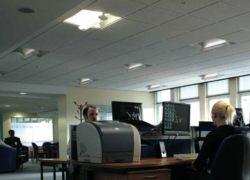
Energy-efficient lighting is being provided as part of the refurbishment of the Swansea headquarters of DVLA using Hager’s Klik DCS system.

The refurbishment of the DVLA headquarters at Swansea includes Hager’s Klik DCS to provide daylight-linking control. The system was specified by contractor Lorne Steward. The refurbishment is due for completion in September 2007 and will improve working conditions for the 4000 staff. Lighting control will be linked to occupancy and daylight levels. Consultants WSP detailed the exact lighting control required from the RIDI dimmable ballasts. These are to dim to 400 lx at desk height in office areas and to 300 lx in rest areas. Remote handsets can be used to dim lighting to 150 lx, and wall switches in meeting rooms can turn lighting off or manually dim or brighten lighting. Using the Klik DCS system and occupancy sensors detects the presence of people and operates the lights. As daylight levels increase, the lights dim automatically and eventually switch off if natural lighting levels are high enough. If no people have been detected for 15 minutes, the lights dim progressively and then switch off. When a person is detected, lights are turned on to full brightness and then dimmed according to daylight levels. The Klik DCS system is based on a marshalling box with 4, 6, 8 or 10 outgoing ways and occupancy sensors with daylight linking.
Related links:


modbs tv logo

Lighting the way

Halesowen College has set a sustainability example for higher education institutions by installing smart lighting as part of its latest environmental initiative, making up to 85% energy savings compared to the previous system.

BESA updates HIU Test Standard

The Building Engineering Services Association (BESA) has announced an important update to its UK Heat Interface Unit (HIU) Test Standard, further strengthening performance benchmarks and supporting the sector’s readiness for incoming heat network regulation.