Hager brings simplicity to smart building control

hager
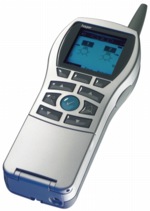
Hager claims that its Tebis TX bus-based control system for building services is the simplest on the market to install and commission. The system uses a single twisted-pair cable and/or radio signals to link input and output devices. It is KNX compatible, so it can be used with products from different manufacturers. A hand-held remote control programmes input and output devices. Cabling is simple and does not require any new installation skills. Hager says that electricians could typically install and commission a system after half a day’s training — often on site while they are completing a project. Tebix TX enables inputs (including wall switches, timers, PIR sensors, photo-electric cells and thermostats) to communicate and switch output devices, which could include lighting, heating, burglar alarms and motorised curtains. One input device or several can switch or control any combination of output devices. Commissioning involves assigning addresses to input and output devices and deciding which output devices should respond to which output devices. The resulting program is then saved onto a smart media card, making it simple to change or upgrade control scenarios in the future. Alternatively, for commercial applications sharing the same building layout, such as retail outlets or leisure centres, the save program reduces time on future projects. The remote control can also be used to simulate operation if devices are inaccessible for testing.
Related links:


modbs tv logo

Lighting the way

Halesowen College has set a sustainability example for higher education institutions by installing smart lighting as part of its latest environmental initiative, making up to 85% energy savings compared to the previous system.

BESA updates HIU Test Standard

The Building Engineering Services Association (BESA) has announced an important update to its UK Heat Interface Unit (HIU) Test Standard, further strengthening performance benchmarks and supporting the sector’s readiness for incoming heat network regulation.