Coverad redefines the electric heater
covrad
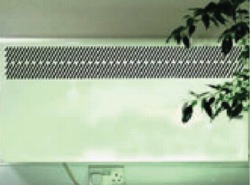
Electric heaters for commercial applications and with a surface temperature of less than 43°C have been developed by Coverad.

Coverad has developed a range of induced-airflow electric heaters for commercial applications that meet the needs of current legislation and cater for a market where safety, electrical efficiency, ease of installation, low maintenance and robust construction are required. Modul8-LST was developed with a county council and a large, well-known Plc. These heaters have similar impact-resistant polymer casings to those used by Coverad to cover hot radiators in many NHS Trust remises, nursing homes, prisons and other public buildings. The casings are self-coloured throughout their thickness. These heaters have a 2 kW element, and the surface temperature of the casing does not exceed 43°C, so they comply with regulations for safe surface temperature. There is a vertical model for installing in awkward spaces between windows and a horizontal model for under windows and along corridors. Each heater is controlled by an integral digital thermostat with drift compensation, providing staged modulation to ensure stable room temperature. Intelligent control options are offers. Bespoke programs are designed according to occupancy cycles. Economy setback temperatures and automatic frost protection can be selected. PIR sensors can be included in the control scheme if required.
Related links:


modbs tv logo

ICOM celebrates Noah Gaunt as Apprentice of the Year 2026

Noah Gaunt of Vaillant Group UK has been named ICOM’s Apprentice of the Year 2026, recognising his outstanding commitment, technical excellence and passion for advancing the future of low carbon heating.

BCIA warns non-domestic buildings risk being overlooked despite decarbonisation drive

Commercial and public buildings risk being left behind in the UK’s transition to Net Zero despite more than £40 billion of funding, investment and policy support being directed towards building decarbonisation, according to the latest Policy Pulse report from the Building Controls Industry Association (BCIA).