Air-quality sensor controls ventilation to requirements
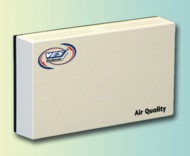
vES
Ventilation can be matched to demand using VES Andover’s AQ sensor, which responds to both carbon dioxide and volatile organic compounds.

An air-quality sensor for VES Andover’s range of air-handling units measures carbon dioxide and volatile organic compounds in rooms or ducts and provides a signal that can be used to adjust air volume and other functions. Such demand-controlled ventilation can reduce energy consumption by up to half. AQ sensors cost less than £200 and are delivered with default settings. If required, the weighting between carbon dioxide and VOCs can be varied. A carbon-dioxide weighting should be used for spaces where the number of people varies — such as shops, sports clubs and meeting rooms. VOC weighting should be used for environments with odours such as cooking, toilets and garage exhaust fumes. The sensor sends a 0 to 10 V signal direct to the fan-speed controller. Single- and 3-phase fans can be controlled.
Related links:


modbs tv logo

Lighting the way

Halesowen College has set a sustainability example for higher education institutions by installing smart lighting as part of its latest environmental initiative, making up to 85% energy savings compared to the previous system.

BESA updates HIU Test Standard

The Building Engineering Services Association (BESA) has announced an important update to its UK Heat Interface Unit (HIU) Test Standard, further strengthening performance benchmarks and supporting the sector’s readiness for incoming heat network regulation.