Passivent delivers natural ventilation for new school
school
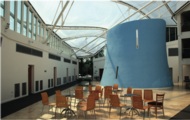
The natural-ventilation strategy at this school in Ramsgate uses Passivent ventilators to draw air into classroom and then deliver it into this atrium.

Natural-ventilation for a new middle school at St Lawrence College, Ramsgate, is provided by a range of Passivent Aircool ventilators. A 3-storey dormitory block, single-storey classroom block and a single-storey hobbies block are grouped around a central atrium roofed with a triple layer of EFTE. The specification of at least three air changes an hour for each of the six prep classroom spaces and atrium area is met using 26 Aircool wall ventilator units, complemented by acoustic baffles and fire dampers to act as transfer grilles into the atrium. The Aircool units are colour coded to RAL colours specified by architect Roger Mahoney. Fresh air is drawn in by the Aircool units, with high-level fan-assisted vents at each end of the top-level walkway at the back of the atrium to exhaust used air through the façade. Aircool ventilators in the façade provide controlled fresh-air intake or extract as part of a natural-ventilation or mechanical-cooling system. They use just 1 W of electricity to provide accurate control of airflow according to weather, speed and direction of wind, range, temperature and the location of the units. Wayne Aston, technical manager with Passivent, explains, ‘Natural ventilation is ideal for buildings such as schools because of the public-sector demand for low-energy sustainable solutions and its ability to function effectively without human input once the initial controls have been set up. It is also extremely cost effective; initial capital costs are typically reduced by 15%, and operating costs can be cut by up to 40%.’
Related links:


modbs tv logo

BCIA welcomes tougher commercial building energy standards but calls for greater ambition across the wider sector

The Building Controls Industry Association (BCIA) has welcomed the government’s confirmation that privately rented non-domestic buildings over 1,000 square metres in England and Wales will be expected to achieve a minimum EPC B rating by 2031, describing the move as an important step forward in improving the energy performance of the UK’s commercial building stock.

GOLDBECK commits to three-year schools partnership to inspire Cardiff’s future construction talent

GOLDBECK has launched a new long-term education initiative in Cardiff, committing to support three local primary schools as part of a programme designed to introduce young children to enterprise, careers and the wider world of construction.