MHI VRF controllers can give individual control of 144 units
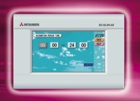
Up to 144 indoor units in an MHI VRF air-conditioning system can be controlled and monitored right down to individual level with two new controllers.
Two touch-screen controllers from Mitsubishi Heavy Industries give building owners precise control over VRF air-conditioning systems and the capability to set individual performance parameters for up to 144 indoor units. The user-friendly SLA-3 and SLB-4 controllers provide control, monitoring, scheduling and administrative functions to facilitate the energy-efficient operation of systems. For multi-tenanted buildings, additional functionality in the SLB-3 monitors the energy consumption of individual units, enabling the energy consumption and costs of individual tenants to be monitored and calculated. The SLB-3 has inputs for connection to a pulse meter to enable energy consumption to be monitored. Operating data for each indoor unit can be downloaded to a PC so the data can be displayed in an Excel spreadsheet to calculate monthly bills based on operating hours, refrigerant flow rate or thermal on/off points. These controllers are based on Windows CE and have an 18 cm colour interactive LCD display with easy icons. Indoor units can be controlled individually, in groups or in blocks of groups. Both controllers enable the system manager to define units, groups or blocks. He can also configure schedules, temperature settings, fan speeds, louvre settings and other functions such as local control. The operation of any unit can be adjusted at any time from the central panel. The display also gives an overview of the status of all units, highlighting maintenance needs.
For more information on this story, click here:
Aug, 08 162 Related links:
Related articles: