

Improving comfort and ventilation — naturally
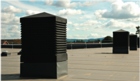
Passivent’s Airscoop natural-ventilation system installed on a building in Co. Antrim has made a major contribution to it having one of the lowest measured internal carbon-dioxide levels in the region, according to independent testing. This experience and claims for Passivent’s Airscoop system are reinforced by independent research by BSRIA; its study on wind-driven natural-ventilation systems (BG2/2005) shows that roof-mounted ventilation will deliver good comfort conditions with low energy consumption and avoid overheating.
Passivent also refers to statistics that show that some 30% of employees working in air-conditioned offices suffer from sick-building syndrome, with risk factors including poor levels of insulation, poor air quality and low humidity — factors that may worsen with the stricter requirements for air tightness in the latest Building Regulations.
Passivent’s remote air dispersal (RAD) Airscoop unit naturally ventilates the building to ensure a flow of fresh air into the office environment. Its design enables ceiling-mounted diffusers to be repositioned if the office layout changes.
Energy consumption is said to nearly halved compared with air-conditioned buildings and capital costs reduced by about 15%. The need for air conditioning can be reduced or eliminated.
One benefit of the system is that is can run overnight to cool the building.