


Hudevad exhibits a talent for art
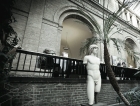
When the heating in the conservatory of the renowned Ny Carlsberg Glyptotek museum in Copenhagen failed, Hudevad responded by modifying SC column radiators to satisfy the aesthetic concerns of in-house architect Dan Ljungar. The museum was built in 1897 and is noted for its elegance. Its contents date from 6500 BC and include 19th-century French paintings and sculptures from masters such as Gauguin, Monet, Rodin and Degas and work by modern painters and sculptors of the 20th century such as Miró, Picasso, Giacometti and Danish artists Eckersberg, Købke and Lundbye.
The museum attracts 350 000 visitors a year.
At the heart of the original building is a large conservatory stocked with 100-year-old palm trees and large works of art. Dan Ljungar explains, ‘When adding new elements like radiators to magnificent old buildings, it is important not to harm the building’s soul by installing something completely inappropriate.
‘We removed the existing balustrade and replaced it with radiators resembling balusters. The design is based on sketches I found in the Glyptotek’s collection.’
Hudevad’s SC element radiator was chosen as closest to what Ljungar envisioned and was specially modified for the purpose. These column radiators are made from steel tubes with square, horizontal headers with brazed, vertical flat tubes raked at top and bottom. The double design was chosen because it has elements on both sides.
‘Hudevad took part in the challenge of redesigning the products,’ says Dan Ljungar. ‘Together with the consulting engineer, a radiator was designed with optimum element spacing to give the least-obstructed view in relation to the desired heating capacity for the space.
‘We have concealed all tappings and pipework, and a handrail has been added on top of the radiators to emphasise the grandeur of the conservatory. As a result, the functional radiator is hidden in plain view. It looks like a balustrade, and visitors would be hard pressed to recognise the structure as a radiator. The modified design of the SC radiator lends itself perfectly to the visual concept of radiator as balustrade.’
Elsewhere, Hudevad Pan and Plan XV radiators are subtly used as unobtrusive heating sources among large works of art. They are painted to match the colour and texture of the gallery walls.
Standard, horizontal Plan radiators with Horizon infill panels have been used between the glass roof and the cornice in a seamless run to ensure elegant and discreet heating at treetop level.