


BSRIA helps assess low-carbon housing
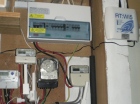
Sophisticated wireless monitoring systems are playing a key role in the EVALOC (Evaluating Low Carbon Communities) project led by the low-carbon building group of the Oxford Institute for Sustainable Development at Oxford Brookes University. Supplied and installed by BSRIA Instrument Solutions, the equipment is monitoring 30 homes in six communities to assess low-carbon technologies such as solarPV, air-source heat pumps, solar-thermal systems etc.
Ongoing data is being obtained on temperature, humidity and CO2 levels.
These six communities were set up under the Government’s low-carbon communities challenge.
The purpose of the EVALOC initiative is to establish the long-term effectiveness of low-carbon technology and its effect on householders using it. The results can only be as good as the data obtained, so the reliability and accuracy of the testing equipment supplied by BSRIA is vital to the project.