


High-efficiency condensing water heaters — paradox or paradigm?
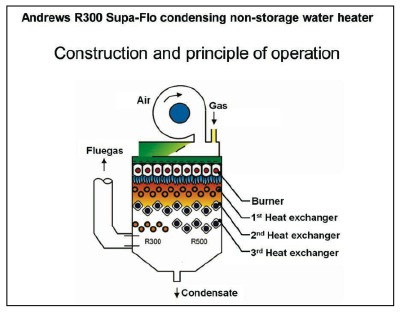
Fig. 1: By passing flue gases through several heat exchangers, the efficiency of generating domestic hot water is maximised.
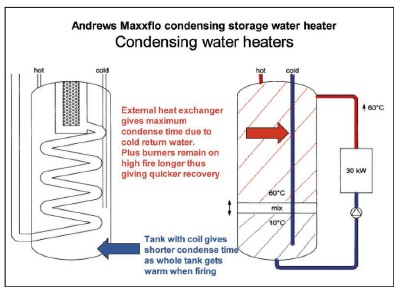
Fig. 2:The efficiency of condensing water heaters is enhanced using designs that minimise the temperature of the return water and maximise the condensing time.
However, a condensing boiler will be more efficient if the flow temperature and the return temperature are lower. In that case, the flue-gas temperature will also be reduced, possibly to the point of water vapour in the flue gases condensing, thus recovering more latent heat. The out-going flue-gas temperatures are normally twice the return-water temperature — although this does not mean the extra benefits of a condensing water heater cannot be realised when operating at 60ºC. The Andrews non-storage condensing water heater, for example, has a pre-mix water-cooled burner that reduces the flame temperature to provide a more efficient flame and, incidentally, very low emissions of oxides of nitrogen and carbon dioxide. After ignition, the flue gases are forced through a further three heat exchangers before entering the secondary flue. Each time the flue gases pass through a heat exchanger, the heat or energy is passed from the combustion flame into the waterways (Fig. 1). For example, before passing through the first heat exchanger, the combustion temperature is about 1200°C. As the gases pass through this exchanger, the flame temperature is reduced to 700°C. When the gases pass the second heat exchanger the flame temperature is further reduced to 140ºC. After passing the third heat exchanger, the flame temperature is about twice the return-water temperature. As the flame temperature is reduced, the heat or energy is transferred into the waterways. The burner for this range of water heaters fully modulates between 20% and 100%, depending on the load. This allows the flame temperature to be reduced at part load whilst permitting a fall in flue temperature sufficient to produce condensate, increasing efficiency. The low water content of these appliances means conditions conducive to the formation of legionella bacteria are virtually eliminated. Two approaches The most common way of operating condensing storage water heaters incorporates either upward- or downward-firing high-efficiency burners within a combustion chamber located inside the storage tank. Whilst efficient, the condense time of this method is limited as the whole tank is being heated, and because heat is also transferred through the flue tube (again located inside the storage tank) to the stored water.Fig. 2:The efficiency of condensing water heaters is enhanced using designs that minimise the temperature of the return water and maximise the condensing time.
The concept used by Andrews for delivering high efficiency ratings from its most recently introduced condensing storage water heater range (Fig. 2) is based on the stainless-steel tank being heated by one or more externally mounted burner modules, each containing a pre-mix burner within a stainless-steel heat exchanger (Fig. 3). It operates according to the loading principle, with the water in the bottom of the tank being fed directly through the heat exchanger, heated up and carried back to the top of the tank.