Trend Controls introduces damper actuators
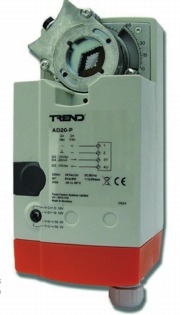
actuator
Direct-coupled damper actuators from Trend incorporate features to simplify and speed up installation.

Significant savings in installation time are claimed for Trend’s extensive range of direct-coupled damper actuators. The range includes spring-return and non-spring-return models. Non-spring-return versions have torques of 5, 10, 20 and 34 Nm. They can move dampers of up to about 6 m2. Spring-return dampers have torques of 10 and 20 Nm, and are principally intended for air handlers with a fire or smoke-control mode. All types come in floating, on/off and modulating control versions. Features to simplify installation include a detachable wiring box, rotation direction switch, de-clutch button and freely selectable mounting position. Some models have a self-centring shaft adapter. The detachable wiring box obviates the need to fit and connect a junction box between actuator and controller. It simply clips to the base of the actuator once wiring has been completed, separating electrical and mechanical installation. The rotation-direction switch can also be used to correct wiring errors. Used with the de-clutch button, it enables the controls to be over-ridden and the dampers manually adjusted — making it easier to test and commission an air-handling system
Related links:


modbs tv logo

BCIA welcomes tougher commercial building energy standards but calls for greater ambition across the wider sector

The Building Controls Industry Association (BCIA) has welcomed the government’s confirmation that privately rented non-domestic buildings over 1,000 square metres in England and Wales will be expected to achieve a minimum EPC B rating by 2031, describing the move as an important step forward in improving the energy performance of the UK’s commercial building stock.

GOLDBECK commits to three-year schools partnership to inspire Cardiff’s future construction talent

GOLDBECK has launched a new long-term education initiative in Cardiff, committing to support three local primary schools as part of a programme designed to introduce young children to enterprise, careers and the wider world of construction.