NG Bailey boosts apprentice training capability
Apprentice
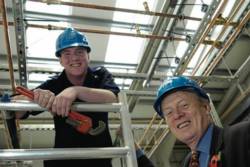
MP Alun Michael gets a hands-on feel of the new wing of NG Bailey’s training academy in Leeds, which he opened in November. He is pictured with apprentice Ryan Bell.

The training academy at NG Bailey in Leeds has been opened by Alun Michael, Minister of State for Industry & the Regions. It boosts Bailey’s training capacity to 400 apprentices. Alun Bailey said, ‘It is vital that businesses make a significant investment in training for the benefit of both themselves and the industry as a whole. A skilled and competent workforce is the key to business competitiveness. ‘NG Bailey’s investment in training is an example to the industry, and I am pleased to open a new training wing that will equip the apprentices of the future with the professional skills they need — an issue which is very important to Government.’ The new training wing houses a new welding facility and enables NG Bailey to provide more mechanical training for its apprentices — satisfying the need for high-quality skills. The company can now provide this vital training in-house. This mechanical training wing represents a £400 000 investment and increases capacity to 23 000 training days a year. Mark Andrews, chief executive of NG Bailey, said, ‘We have run a successful apprentice-training programme over the last 50 years. Training and development are very important to us; they are a fundamental part of the business strategy, which is why we have invested so heavily in ensuring our apprentice-training programme is the best in the industry.’


modbs tv logo

Yorkshire and Humber leaders set out plans to tackle skills shortages

Leaders from across Yorkshire and the Humber came together on Friday 11th September to launch ambitious plans aimed at tackling the region’s growing construction skills shortages.

Six in 10 UK businesses look to adapt operations in response to extreme heat

According to the Q2 Barclays Business Prosperity Index, six in 10 businesses surveyed (60%) have either increased investment to adapt to extreme heat (37%) or are considering doing so (23%).