Meeting new building-management legislation using existing instrumentation
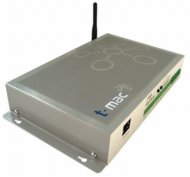
t-mac
An Internet-based approach to meeting new building-management legislation using existing instrumentation is provided by the t-mac system.

An Internet-based approach to using existing instrumentation as part of remote management for energy monitoring and plant maintenance is offered by t-mac Technologies. A t-mac device can be integrated within or installed close to critical assets and equipment, collecting real-time data on an asset, energy conditions or power outages. This information can be gathered via analogue or digital inputs and transmitted over the Internet via GPRS, Ethernet or telephone line at regular intervals to a central server. PCs on the Internet can log on through an access control portal to view live and historic data and run reports relating to individual plant items or multiple sites. A system can, for example, account for the energy consumption of equipment through techniques such as logging meter and sub-meter total gas, electricity and oil consumed in a building. It can measure heating/cooling energy supplied to a building and measure the run hours of equipment operating at constant load. The t-mac device is on the Energy Technology List and said to be one of the few approved solutions meeting new building-management legislation. It can monitor and measure conditions mentioned above and create reports to prove that assets and buildings are being run efficiently. A t-mac system is said to be easy to install and capable of being up and running in a matter of minutes for under £2000.
Related links:


modbs tv logo

Lighting the way

Halesowen College has set a sustainability example for higher education institutions by installing smart lighting as part of its latest environmental initiative, making up to 85% energy savings compared to the previous system.

BESA updates HIU Test Standard

The Building Engineering Services Association (BESA) has announced an important update to its UK Heat Interface Unit (HIU) Test Standard, further strengthening performance benchmarks and supporting the sector’s readiness for incoming heat network regulation.