


£1 billion London regeneration project starts with demolition
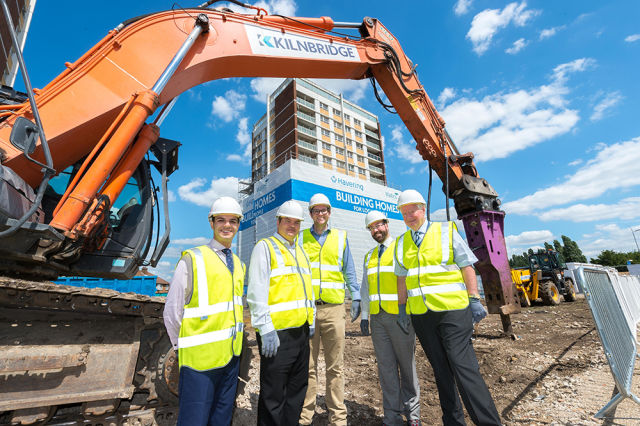
One of the capital’s biggest regeneration projects began last month with the demolition of thousands of existing older houses.
The Napier and New Plymouth House site in Rainham is the first of 12 to be regenerated as part of the joint venture partnership between Havering Council and Wates Residential.
The project will deliver around 5,200 high quality homes over the next 12 to 15 years, doubling the amount of council rented accommodation and more than doubling the number of affordable homes. The right to return is also guaranteed to all residents, meaning families that have been relocated from the estates under development will be able to return.
As part of Havering Council and Wates Residential’s pledge to deliver a borough-wide legacy and boost the local economy, the demolition will be carried out by local contractor Kilnbridge Construction Services, which has offices in Rainham.
Kate Ives, Development Director for Wates Residential, says: “As our long-term partnership with Havering Council progresses, we will continue to increase opportunities for residents and local businesses through our investment in education, training and skills.”
Councillor Damian White, Leader of Havering Council, adds: “We are ensuring that this investment in the borough goes much further than just creating new homes; through our supply chain initiative, Meet the Buyer events, training opportunities and apprenticeships, we can make sure the project benefits as many businesses and residents of Havering as possible”.