


Spicy Blend from Lucent Lighting
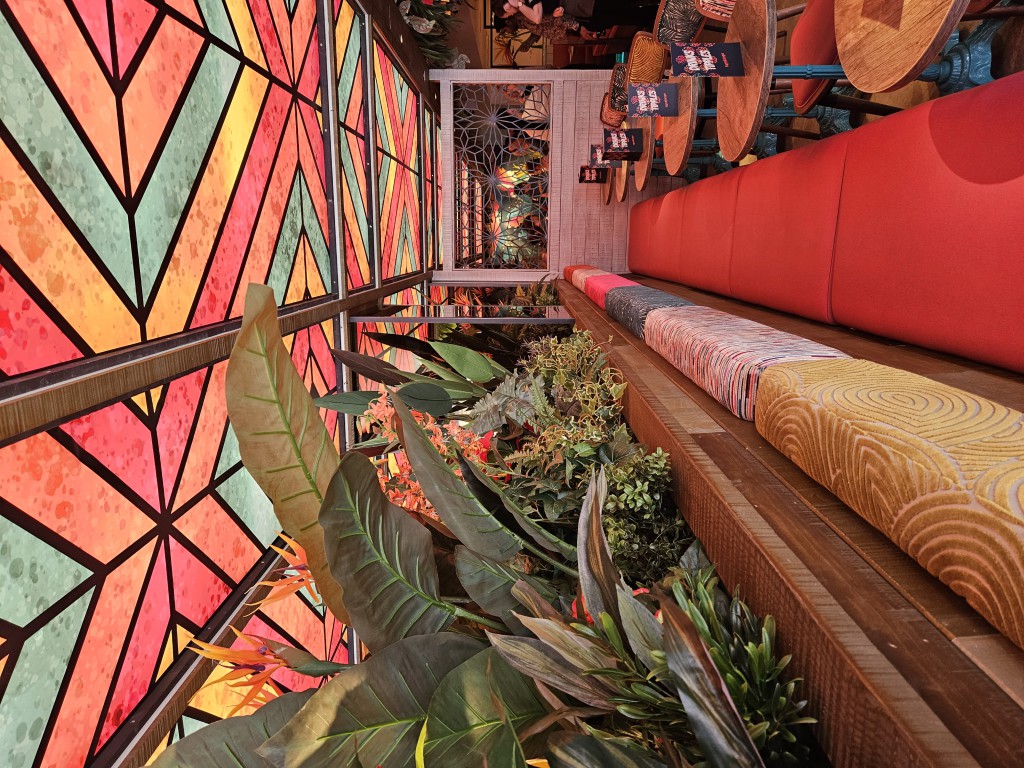
Lucent Lighting has provided the lighting solutions for a stunning new restaurant in Leeds.
The fourth Tamatanga venue has opened its doors in Leeds as a bold, bright and beautiful bar and restaurant experience. Tamatanga offers authentic, fresh Indian cuisine, with hand ground spices and local ingredients crafted by expert chefs. The food and décor are true to its roots – fresh and flavoursome.
Tamatanga is designed with a dazzling blend of colours, textures, patterns, shapes and lights. Interior design company FiFi Interiors has decked out the space with fun booths and bar side seating for exciting and casual dining.
Mistry Lighting created the luminous lighting scheme, specifying dynamic lighting solutions from Lucent Lighting to create this vibrant, appealing space. Colourful lights are suspended over the bar, forming a linear rainbow, while InGround40 floor lights uplight the booth seating and tables are spotlighted from above.
Architectural lighting was used to illuminate the colourful interiors, bringing the rich textures and tones to life. Track lighting TubeLED spotlights the tables and unique artwork, framing the bespoke painted murals in bright illumination. Lucent’s spike mounted VISTA floodlights highlight the lush greenery planted throughout to create the sense of a tropical wonderland.
The result is an eye catching venue with bold and memorable design features, perfect for social media moments and photography backdrops.