Cylon BMSs maximise energy strategies at Chiswick Park
cylon
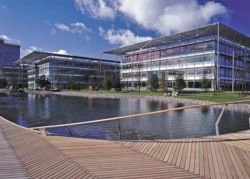
The benefits of reducing solar gain and displacement ventilation in the 12 buildings on the Chiswick Park development are maximised by Cylon building-management systems.

Measures to reduce solar gain at the 167 000 m2 Chiswick Park office development have made it possible to use displacement ventilation to deliver comfort cooling. The energy strategy for these buildings, designed by Richard Rogers for developer Stanhope, includes external aluminium louvres and retractable external fabric blinds (on earlier buildings). They shade 90% of the surfaces of the buildings and are controlled by light sensors. Cylon building-management systems serve all the buildings on the site and provide the key to making the most of the energy-efficient design. For example, relatively small chiller plant is used, and free air cooling is provided when the outside temperature is 18°C or lower. In the building occupied by Technicolor, for example, two air-handling units provide the required ventilation. A central riser distributes air under the floor at each level to displacement ventilation grilles. Air is extracted through the lighting fittings. Heat loss in winter is compensated for by perimeter heating. The BMS automatically controls the amount of external air supplied. In summer, 90% of the air is recirculated to reduce chiller load. The Technicolor building has additional chiller plan for communication, IT, broadcast and editing suites on the first floor. Business continuity is vital, and the BMS manages lead, lag and standby units to ensure uninterrupted cooling. The entire project has 7200 points in 12 buildings with communication over Arcnet and Ethernet networks. Cylon Unitron UC32 and Unitron 2000 hardware is installed and controlled by Unitron Command Centre software.
Related links:


modbs tv logo

ICOM celebrates Noah Gaunt as Apprentice of the Year 2026

Noah Gaunt of Vaillant Group UK has been named ICOM’s Apprentice of the Year 2026, recognising his outstanding commitment, technical excellence and passion for advancing the future of low carbon heating.

BCIA warns non-domestic buildings risk being overlooked despite decarbonisation drive

Commercial and public buildings risk being left behind in the UK’s transition to Net Zero despite more than £40 billion of funding, investment and policy support being directed towards building decarbonisation, according to the latest Policy Pulse report from the Building Controls Industry Association (BCIA).