Priva helps harvest renewable energy in farm development
Priva
The key to the successful exploitation of renewable energy for this holiday development at a farm in Cornwall is the use of a Priva building-management system.

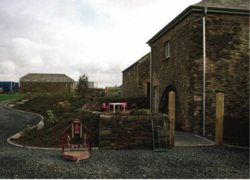
The software engineering tool that is part of the Priva building-management system has been used to control a variety of alternative-energy sources for holiday accommodation in Cornwall and enabled the system to be set-up with minimal special work. Four barns at Mesmear Farm, St Minver, have been converted to offer holiday accommodation, teenagers’ activity area, swimming pool, housekeeper office/residence and workshop. The building services for the project were proposed by systems specialist Murch & Baker Heating. Danny Baker of the company explains, ‘The farm owner was looking for an energy-saving solution and using our knowledge of energy-management techniques, we were able to offer a design that incorporated both building controls and renewable energy.’ The result was the installation of a geothermal heat pump, solar panels and a borehole providing all the site’s water, controlled by a Priva Compri HX4 controller.’ The heat pump is used to produce water at 45 to 50°C for space heating and up to 55°C for hot water from a ground temperature of 8 to 13°C. The solar panels are mainly used for warming the swimming pool, with any excess heat being diverted to the heat pump. Electricity for lighting is drawn from the National Grid, but plans for self sufficiency in this area are being discussed with Murch & Baker. The architect for the project was so impressed with the design submitted by Murch & Baker that another residential project is being discussed.
Related links:


modbs tv logo

BCIA welcomes tougher commercial building energy standards but calls for greater ambition across the wider sector

The Building Controls Industry Association (BCIA) has welcomed the government’s confirmation that privately rented non-domestic buildings over 1,000 square metres in England and Wales will be expected to achieve a minimum EPC B rating by 2031, describing the move as an important step forward in improving the energy performance of the UK’s commercial building stock.

GOLDBECK commits to three-year schools partnership to inspire Cardiff’s future construction talent

GOLDBECK has launched a new long-term education initiative in Cardiff, committing to support three local primary schools as part of a programme designed to introduce young children to enterprise, careers and the wider world of construction.