Standby-power upgrade keeps WRN on the air for new clients
WRN
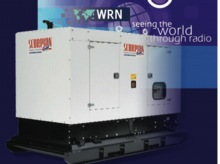
Upgrading its standby-power system was vital to WRN expanding its client base, and the company turned to the supplier of the original systems, Scorpion Power Systems.

When the time came to upgrade its original standby-power system, WRN, which specialises in global radio networks and specialist broadcast services, turned to the original supplier — Scorpion Power Systems. Dean Haddock, operations manger at WRN, explains, ‘Without upgrading our standby-power systems, we would not have been able to expand our client base. Over the years, we have received excellent service from Scorpion Power Systems and so didn’t hesitate to contact them when the decision was made to go ahead with the upgrade. All installation and electrical work was carried out by the company with minimum disruption to staff and services.’ Following an in-depth survey, Scorpion suggested a 30 kVA UPS to provide six minutes of back-up power and a 115 kVA continuously rated diesel generators. On such an installation, power passes through the AMF changeover panel to the UPS and then on to the critical loads. When the mains supply fails or goes outside of acceptable limits, critical loads are supported by the UPS with no break in continuity. Heavy loads such as air conditioning will experience an interruption of about 20 seconds while the generator starts and takes up the load. The diesel generator has a super-silent acoustic weatherproof canopy and is installed in a bund to retain any diesel spillage. Special features include heater to aid cold starting, fire shutdown system and a remote monitoring panel.


modbs tv logo

Lighting the way

Halesowen College has set a sustainability example for higher education institutions by installing smart lighting as part of its latest environmental initiative, making up to 85% energy savings compared to the previous system.

BESA updates HIU Test Standard

The Building Engineering Services Association (BESA) has announced an important update to its UK Heat Interface Unit (HIU) Test Standard, further strengthening performance benchmarks and supporting the sector’s readiness for incoming heat network regulation.