Ensuring the fire integrity of plastic conduits
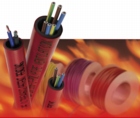
The intumescent material that lines Polypipe’s FireBrake plastic electrical conduit ensure fire integrity when passing through a fire compartment.
Polypipe Ventilation has applied the concept of its Domus FireBrake for preventing the spread of fire through plastic ventilation ducting to electrical conduit with the launch of the FireBrake electrical conduit. The 17th edition of the IEE Wiring Regulations requires that when a wiring system passes through a fire compartment, the penetration must be reinstated to the degree of fire resistance before penetration. It also requires that conduit systems must be sealed internally as well as externally. FireBrake electrical conduit has an internal layer of intumescent material that reacts to fire and rapidly expands to provide a totally closed fire-stop plug. It is tested to close off the required void. FireBrake electrical conduit is available in 20 and 25 mm sizes and is connected to plastic electrical conduit using standard couplers. It is estimated that FireBrake can reduce installation times on traditional methods by at least two-thirds. It is supplied in 300 mm lengths, which can be easily cut to complete two installations. FireBrake can be left empty for future wiring requirements. Subsequent changes are much easier than if the conduit were sealed with foams or mastic. FireBrake has been tested to BS476 Part 20/EN 1366-6 for up to 2 h with variable cable fill.
For more information on this story, click here:
Jun, 08 175 Related links: