


Scorpion secures power for Health Protection Agency
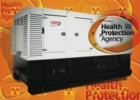
Scorpion Power Systems has boosted the standby power at the Oxfordshire facility of the Health Protection Agency’s Radiation Protection Division to ensure safety. The project was won on competitive tender and provides a turnkey solution, including all electrical installation work and commissioning.
The building previously relied on a smaller generator, also supplied and installed by Scorpion.
The role of the Health Protection Agency is to provide an integrated approach to protecting UK public health by providing support and advice to the NHS, local authorities, emergency bodies, other arms-length bodies, the Department of Health and devolved administrations.
The specially made Powerhouse diesel DS550 generator has a weatherproof acoustic canopy and protects critical and sensitive equipment against major electrical catastrophe.
When the mains supply fails or goes outside acceptable limits, the AMF panel disconnects the mains, starts the generator and connects it to the load. When the mains returns, the AMF will transfer the load back to the mains and, after a cool-down time, shut down the generator.
Adrian Brown of the Health Protection Agency explains, ‘As the Radiation Protection Division is located in a fairly rural area, it can be vulnerable to inclement weather. With so many demands upon the division, it is important that the facility can maintain operations when a power cut occurs.’