


Broag woodchip boiler outperforms expectations at Stansted Airport
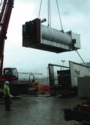
To help minimise carbon emissions from Stansted Airport’s new £50 million terminal extension, Broag has supplied a 2000 kW biomass boiler which has outperformed all expectations during its first winter of operation. It is one of the biggest biomass heating boilers in commercial use in the UK. Made by Gilles in Austria, it uses woodchips.
The performance of this boiler since last November has been so efficient that it is now the primary boiler for the whole airport and is expected to reduce gas consumption by nearly 40%.
Andy Jefferson, head of environment at Stansted Airport, says, ‘To say we are delighted with the performance of the new biomass boiler is an understatement.
‘We set out ensure the recent terminal extension would be carbon neutral, but performance data so far indicates those savings go much further, with results between November 2008 March 2009 alone showing that gas consumption at Stansted was around 60% of the predicted forecasts for this period and over 30% lower than the same period for the previous year. And all this despite it being one of the coldest winters on record for over a decade.
‘Whilst initiatives such as our asset-replacement programme have contributed to these overall results, the introduction of biomass technology has by far been the largest contributor.’