


Natural ventilation as a key to low-energy buildings
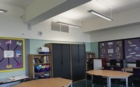
Passivent natural-ventilation systems for commercial buildings are claimed to have been proven in real life to be one of the strategies to attain an A-rated Energy Performance Certificate. Their performance attracts BREEAM credits and can often help buildings achieve at least a ‘very good’ rating.
Compared with air-conditioned buildings they reduce energy consumption by up to half and capital costs by 15%. Maintenance costs can reduced by 75%, and there is no need for a separate plant room In one installation, a Passivent system is calculated to have reduced energy demand by over 80%.
The savings are achieved by harnessing the physics of natural air movement. Warm internal air rises naturally, and air moving across the roof draws the used air from the building through strategically placed terminals.
The only electricity consumption is to occasionally attenuate louvres to control inlets and extracts. The control system enables precise adjustment according to temperature, air quality and CO2 levels — depending on application.
Because a Passivent system can operate 24 h a day, buildings can be cooled overnight.
Passivent is a founder member of the NatVent EC-EU-funded project co-ordinated by the Building Research Establishment to develop practical natural-ventilation solutions for the commercial sector and is developing ‘smart’ solutions to promote adoption of natural ventilation.