


Honeywell valves speed up DHW commissioning
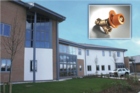
Over a hundred Honeywell Kombi 4 throttle and balancing valves were installed by M&E contractor Farebrother of Manchester to provide for easier and faster commissioning of DHW systems in the new Holywell Community Hospital in Wales. These valves ensure a constant supply of hot water to all outlets at the right pressure. They also assist in occasional thermal flushing to inhibit legionella bacteria.
The Kombi 4 valves are installed in the hot-water returns to balance the hot-water system. Richard Parker, project engineer with Farebrother, explains, ‘The valves balance the system automatically to a preset temperature during commissioning. It was much easier and faster than the traditional practice, which was to install lockshield valves throughout the hospital. We would then have had to adjust each valve manually to balance the system, which would have been very time consuming. The Kombi 4 valves also maintain a much more accurate temperature at all hot-water outlets.’
Normal operation is 50 to 55°C. When water at over 70°C is flushed through the system for disinfection, the valves open automatically to ensure hot water is rapidly distributed to all risers and pipeline, while maintaining the balance. When flushing is complete, the valves automatically return to their normal control state.