


Code Level 6 housing reaches completion in Chelmsford development
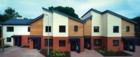
Ingleton Wood’s 10-unit residential scheme at Mendip Road in Chelmsford has been certified to Level 6 of the Code for Sustainable Homes — but at a cost. The total cost of the scheme was £1.5 million, about 40% more than a standard Level 3 scheme. The scheme is said to be the first affordable housing scheme nationally to achieve Level 6, as well as being the first Level 6 scheme in the eastern region and the largest Level 6 scheme completed to date.
Jon Boon, a partner with Ingleton Wood, the scheme’s architects and environmental designers, says, ‘The new Government has reaffirmed the previous Government’s commitment that by 2016 all new homes will be built to zero-carbon standard. This scheme achieves this landmark six hears ahead of that target. It will be an invaluable source of experience for advancing the environmental housing agenda towards this ambitious goal.’
With heating from communal biomass boilers and power from photo-voltaic cells on the roofs, the units are defined as zero carbon.
The building fabric achieves U-values of 0.13 W/m2K for the walls and roof. The triple argon-filled glazing with low E to maximise solar gain has an equivalent U-value of 0.7 W/m2K.
Timber structural insulated panel construction achieves airtightness 10 times better than traditional construction. Mechanical ventilation with heat recovery has been installed.
Nearly all the south-facing roof area has been used for Solar PV, resulting in 4 kW per house and 2.5 kW per flat. The electricity generated meets the requirements of lighting, ventilation equipment and all cooking and electrical appliances.
The predicted energy cost for heating power and lighting is around £20 a year, compared with around £400 for a typical house to current Building Regulations.
Two biomass boilers in a central plant room provide heating and hot water via underground preinsulated pipework to each home, where there are heat-exchange boxes with smart meters.
Rainwater harvesting is provided, keeping water use to a design figure of 76 l per person per day for flushing WCs and washing machines.