


Natural approach to ventilation provides school low-energy cooling
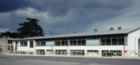
A natural approach to ventilation is helping a £10 million school create a better learning environment and have a positive impact on carbon emissions and energy consumption. The new 2-storey Willow Park Junior School in Blackrock, County Dublin, comprises 25 classroom, offices, library and general purpose area — all of which are naturally ventilated by a Passivent system.
Actuators in the windows allow fresh air in.
On the ground floor, this air is drawn across the rooms to natural-ventilation shafts linked to 14 Passivent Airstract terminals in the roof.
On the first floor, the air flows across the space to controlled vents on the far side of the building.
The entire strategy is controlled using information from temperature and CO2 sensors. Teachers can over-ride the automatic controls if they need to.
Passivent explains that natural ventilation is proven by research to use up to 50% less energy than air conditioning, yield 15% savings on capital costs and 75% savings on maintenance costs. There is also no need for a separate plant room. Free cooling can also be provided overnight.