Condensing water heaters are part of university’s environmental plan
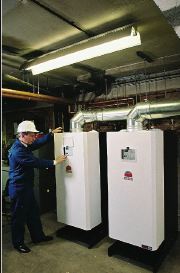
As part of an ongoing and environmentally aware long-term maintenance programme, six Andrews Maxxflo condensing storage water heaters have been installed on the Streatham campus of the university of Exeter.
As part of an investment programme that includes upgrading and replacing current facilities as part of a long-term maintenance programme, six Andrews Maxxflo condensing storage water heaters have been installed in various locations on the Streatham Campus of the University of Exeter. They join numerous other Andrews water-heating and boiler installations already operating on the site. The university places great importance on environmental considerations when allocating investment resources. Hence, when the first services plant was replaced about five years ago, well ahead of the last revisions to Part L2 of the Building Regulations, the estates department adopted the energy-saving principles of separating and decentralising the heating and hot-water loads. The Maxxflo condensing storage water heaters have been installed in three residential buildings and the sports hall as a straight replacement for a malfunctioning unit of another make. Maxxflo features include high-efficiency stainless-steel heat exchangers, premix modulating gas burners and stainless-steel tank. Up to 80% of the tank volume can be generated in condensing mode, producing a nett efficiency of 109%.
Related links: