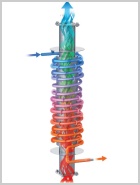
Condensing gas-fired steam humidifier

Condair’s GS condensing gas-fired steam humidifier recovers heat from exhaust gases to preheat the incoming water supply (pictured) to improve energy efficiency. The lower flue-gas temperature also allows plastic, rather than stainless-steel, flues to be used — reducing installation costs. Outputs range from 23 to 272 kg/h. Recovering heat from the flue gases to preheat incoming cold water improves humidity control compared to non-condensing gas humidifiers as the steam output remains more consistent. Compared with electric steam humidifiers, a condensing gas-fired unit has around 60% lower energy costs and will pay for itself within a year or two. The touchscreen controller shows all operating parameters. BMS connectivity is included as standard via Modbus, BACnetIP and BACnet MSTP (slave).


Condair’s GS condensing gas-fired steam humidifier recovers heat from exhaust gases to preheat the incoming water supply (pictured) to improve energy efficiency. The lower flue-gas temperature also allows plastic, rather than stainless-steel, flues to be used — reducing installation costs. Outputs range from 23 to 272 kg/h.

Recovering heat from the flue gases to preheat incoming cold water improves humidity control compared to non-condensing gas humidifiers as the steam output remains more consistent.

Compared with electric steam humidifiers, a condensing gas-fired unit has around 60% lower energy costs and will pay for itself within a year or two.

The touchscreen controller shows all operating parameters. BMS connectivity is included as standard via Modbus, BACnetIP and BACnet MSTP (slave).

For more information on this story, click here: October 2016, 168
Related links:
Related articles:


modbs tv logo

BCIA welcomes tougher commercial building energy standards but calls for greater ambition across the wider sector

The Building Controls Industry Association (BCIA) has welcomed the government’s confirmation that privately rented non-domestic buildings over 1,000 square metres in England and Wales will be expected to achieve a minimum EPC B rating by 2031, describing the move as an important step forward in improving the energy performance of the UK’s commercial building stock.

GOLDBECK commits to three-year schools partnership to inspire Cardiff’s future construction talent

GOLDBECK has launched a new long-term education initiative in Cardiff, committing to support three local primary schools as part of a programme designed to introduce young children to enterprise, careers and the wider world of construction.