


Panasonic introduces R32 Big PACi Series
Panasonic has introduced the R32 Big PACi Series. The series, available in 20kW and 25kW capacities uses R32 refrigerant, includes a water heat exchanger option and supports Panasonic’s ‘full switch to R32’ initiative and its commitment to Environmental Vision 2050.
Business owners making the switch to R32 PACi can also benefit from energy and cost savings, thanks to a higher energy efficiency performance of up to 10% with R32. Due to the water heat exchanger connection, this solution is an ideal alternative to traditional boiler systems for small retail spaces and office projects that are environmentally conscious. Furthermore, the R32 Big PACi series offers a reduced amount of HFC refrigeration compared to conventional R410 models to help contribute to a green future.
Designed for easy installation, the new models have a more compact indoor chassis with a reduced depth by 230mm versus the conventional Big PACi R410 range. The compact design still maintains the same level of efficiency overall and has an impressive SEER rating of up to 5.25 and SCOP rating of 3.61.
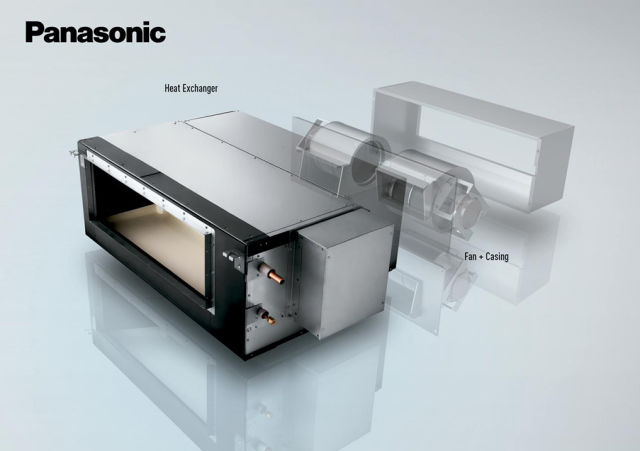
In addition, R32 PACi includes a split-able duct indoor unit which can be divided into the heat exchanger and fan parts, allowing for easier installation within narrow spaces such as small retail shops. The indoor unit is also up to 16kg lighter in weight than conventional Big PACi R410 model