

Waterloo fast tracks air-terminal solution for retail development
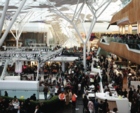
The large range of air-terminal devices supplied by Waterloo Air Products for The Westfield London retail development includes a comprehensive mix of standard and custom-made units. They include double-deflection grilles, high-capacity swirl grilles, linear slot diffusers, high-induction barrel slot diffusers, Hi-Flo jet diffusers, drum Jet diffusers and supply-air nozzle diffusers.
Waterloo worked closely with M&E contractor Imtech Meica to fast-track the production of the equipment.
Ensuring air was distributed effectively throughout the centre proved challenging, with doors constantly opening and closing, varying levels of footfall and the vagaries of the climate. Computational heat and fluid dynamics models based on all doors being closed were used to design the air-conditioning systems, with door heaters installed to compensate for heat losses.
All grilles have a noise rating of 36 dB(A), pressure losses of 20 Pa and a terminal velocity no greater than 0.25 m/s at head height.
Most grilles were standard white with 30% gloss to meet the centre’s aesthetic requirements. Some grilles in the Cafe Court are black to blend with specific design requirements.
The project required regular deliveries to meet stringent programme deadlines.