


New embodied carbon calculator for building services
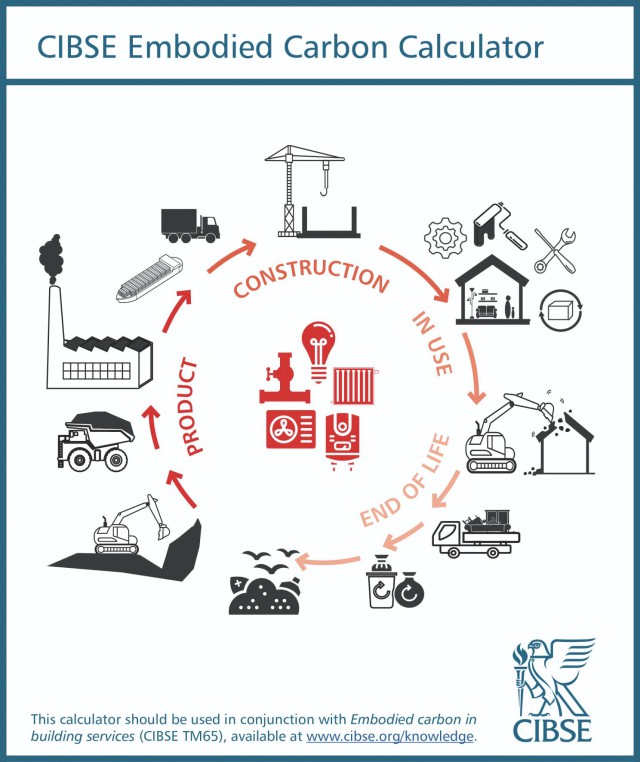
The Chartered Institution of Building Services Engineers (CIBSE) has published a digital Embodied Carbon Calculator tool to enable engineers to estimate the embodied carbon associated with mechanical, electrical and public health systems in buildings.
The digital tool is intended to support consultants, researchers and manufacturers in implementing CIBSE TM65 Embodied carbon in building services: a calculation methodology, by performing the calculations set out in the document. CIBSE Technical Memorandum 65 was published last year to enable the embodied carbon of building services equipment to be calculated when no Environmental Product Declaration (EPD) is available.
Embodied carbon is associated with the extraction of materials, manufacture, repair, disassembly and disposal. Environmental product declarations (EPDs) are a standardised way of providing the embodied carbon and other environmental impacts of a product. However, because of the complexity of building services products and their supply chains, very few building services equipment manufacturers offer EPDs.
To use the digital Embodied Carbon Calculator tool, a manufacturer must first complete the Manufacturer Form describing the materials used in the product.
Using data from the manufacturer's form, a user is then able to complete either a basic embodied carbon calculation, when limited information is available, or a more robust mid-level calculation. Once the user has added contact details and completed consent to publication details, the result may be used as a self-assessed value for the embodied carbon of the product.
Using this tool as a supplement TM65 will provide engineers with a consistent approach to the way embodied carbon calculations for building services products are carried out and reported.