Cylon controls renewable systems at Solaris Centre
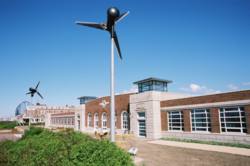
Low- and zero-carbon electricity generation at the Blackpool Solaris Centre include CHP, PV panels and wind turbines — managed by a Cylon Unitron system.
Blackpool’s Solarium has been restored in keeping with its original use as a sun room to become a low-energy building incorporating renewable-energy systems. The new Solaris centre includes a photo-voltaic roof and wind turbines. The building can generate up to 35 kW of electricity. the 232 m2 of PV panels can generate 18 kW and the wind turbines up to 6 kW each. There is also a passive solar-heating panel on the roof to pre-warm water for the central-heating system. A CHP system can generate 5.5 kW of electricity. The turbines start generating electricity at wind speeds of 1.3 m/s and achieve 80% capacity at 4.4 m/s. The average wind speed for Blackpool is 6 m/s, and the average output per day from each turbine is calculated to be 45 kWh. A Unitron system from Cylon manages the power load and monitors electrical consumption. It automatically draws power from the grid during special events when the installed capacity is insufficient.
For more information on this story, click here:
July 06, 78Related links: