Airedale air-cooled chiller reaches new level of energy efficiency
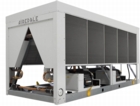
chiller
Airedale’s TurboChill air-cooled chiller can achieve a seasonal energy efficiency of 5.7.
Airedale’s TurboChill air-cooled high-capacity chiller is its most efficient yet. Among energy-saving features are centrifugal Turbocor with a number of cutting-edge components. Seasonal energy-efficiency ratings of up to 5.7 are said to be around 50% higher than traditional screw chilled and unparalleled for an air-cooled chiller. The Turbocor compressor itself has an EER of up to 8.0 at part load. These self-optimising compressors have variable-speed drives, so that a TurboChill has an output range from 500 to 1100 kW. The refrigerant is R134a. The cooling fans have sickle blades and EC motors. There are two sound options — quiet and super-quiet. Sound levels are said to be 5 to 7 dB(A) less than a screw compressor of similar size. Starting current is just 2 A. Up to four of these oil-free compressors enable the TurboChill to operate up to four compressors on a single circuit, intelligently managed by AireTronix controls. The single-pass evaporator offers the same performance and efficiency as a flooded evaporator, but with a much smaller refrigerant change. Optimised heat exchange and oil-free operation allow a reduced compression ratio and increased EERs of up to 10%. TurboChill chillers meets the requirement of Eurovent Class A rating and are included on the Energy Technology List.
For more information on this story, click here:Dec 2007, 177



modbs tv logo

Lighting the way

Halesowen College has set a sustainability example for higher education institutions by installing smart lighting as part of its latest environmental initiative, making up to 85% energy savings compared to the previous system.

BESA updates HIU Test Standard

The Building Engineering Services Association (BESA) has announced an important update to its UK Heat Interface Unit (HIU) Test Standard, further strengthening performance benchmarks and supporting the sector’s readiness for incoming heat network regulation.