


Natural ventilation is a key feature of refurbished 1960s office building
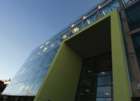
Natural ventilation is one of the techniques used to convert an energy-hungry office building in Sheffield into a modern, economically sustainable and environmentally sensible community facility. Other techniques include a fully glazed twin-wall facade and biomass solid-fuel heating system.
Sorby House is a 4-storey office block dating from the 1960s and has been refurbished to provide a landmark building to act as a catalyst for the 10-year regeneration programme in the Burngreave area.
The natural ventilation is provided by Passivent systems, which will ensure a fresh yet quiet environment.
Passivent Aircool window ventilation inlets strategically positioned in the glazed facade draw fresh air through the 3500 m2 of office spaces using natural variations in air pressure. Their integral acoustic attenuation modulates potentially distracting urban noise from outside.
Some 25 suspended ceiling louvres also use the principles of natural air movement to distribute the fresh air throughout the building.
The twin walls of the facade glazing and internal vertical ducts create a passive stack (or chimney) through which the used internal air rises to be exhausted via four Passivent Airstract high-capacity units on the roof and 10 terminals above the twin-wall facade.
Stephen Mitchell, associate director at Boyd Bryan Architects, explains, ‘Cost analysis proved that air conditioning could be installed for a similar capital cost to the natural passive ventilation system used, but the ongoing running and maintenance costs were substantially higher and not economically sustainable in the longer term.’
The Passivent system functions mainly by natural air movement, requiring electricity only to adjust the louvres. It can operate 24 hours a day, allowing excess heat build up during the day to be extracted at night, in effect providing free night cooling. Natural-ventilation systems have been shown to reduce energy consumption by up to 50% over air-conditioned buildings, yield a 15% saving on capital costs and 75% savings on maintenance costs. They can also eliminate the need for a plant room.