


Microwave sensors control lighting in Hull development
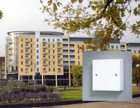
Using microwave presence detectors from CP Electronics to control lighting in this development in Hull is expected to save over £10 000 a year.
Using microwave detectors to control lighting in the Queen’s Court residential/business development in Hull is expected to reduce electricity consumption by £10 000 to £12 000 a year. The 7-storey city-centre complex includes 115 executive apartments and two floors of penthouse apartments. It is also home to the regional headquarters of the BBC.
CP Electronics’ MWS-1 presence detectors were installed by electrical contractor Merix. These detectors have a range of up to 30 m, reducing the number required to cover a large area.
A total of 53 detectors were installed in corridors in 21 areas of the complex to automatically switch lights on and off as people enter and leave these shared areas. They were installed in less than four weeks.
For more information on this story, click here: Nov09, 102