

Daikin initiates research into practical net-zero-energy office building
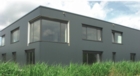
Daikin Europe has worked with major European research institutions to construct a building to develop economically feasible net-zero-energy-building concepts based on heat pumps. The building was scheduled for completion in July 2010 at Herten in Germany, with testing to then run for 12 months. From 2012, new technologies in the pipeline will be added to the project to test and promote their use. Among the research institutions involved is Manchester University, and the project is co-ordinated by environmental application research at Daikin Europe.
The building includes heat pumps and solar PV as renewable-energy sources. The emphasis of the project is on practicality. The building type chosen, a combination office/warehouse complex, is a widely used concept to which existing and easily available technologies will be applied. Although this building is new, the intention is also to gain information to apply to existing buildings.
Existing technologies being used include heat pumps, energy-recovery ventilation and energy production using solar cells. These technologies fit well since the low net energy consumption of heat pumps makes it economically viable to generate the required electricity using solar cells.
Other technologies incorporated are ventilation with heat and humidity recovery, and free cooling. The building is also smart-grid ready through energy use and adaptation of demand.