


Lighting control without wires
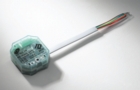
Wireless lighting-control technology from CP Electronics enables fully featured and cost-effective lighting controls to be installed with minimum disruption. The An-10 range delivers all the control functions that would be expected of a hard-wired system — including presence/absence detection, maintained illuminance, dimming (DSI/DALI digital and 1 to 10 V analogue) and scene setting.
Reliability is achieved by routing control messages to specific devices according to the needs of the system. The result is said to be significantly reduced data traffic and faster and more efficient operation than other wireless systems for lighting control. An-10 can also route control messages by different routes (hybrid mesh network), giving exceptional resistance to interference and other transient conditions.
A hierarchy of address codes identifies the place of each device in a system. Building codes identify devices that form part of an overall system such as a building, with further sub-zoning through local and sub-local codes to define devices in specific locations such as a room or open-plan space. Common control over multiple locations, such as corridor linking, is achieved using area codes.
Commissioning and reconfiguration is carried out using remote programmers. Extra devices can be installed at any time and programmed into the system.