


Delmatic helps shed new light on biology research
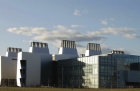
Delmatic has provided a lighting-control system for the 30 000 m2 MRC Laboratory of Molecular Biology at Cambridge. The new building is reminiscent of paired chromosomes. There are two long north and south laboratory wings joined by a spacious atrium containing seminar rooms and a lecture theatre.
The Dali lighting-management system provides individual addressable switching, dimming and monitoring of some 14 000 luminaires — as well as testing and monitoring of some 3500 Dali emergency fittings equipped with Em-Pro ballasts. The result is a highly flexible system that can be easily adjusted as the functions and requirements within a space change.
Lighting is controlled according to daylight and occupancy.
The system can be configured via graphical head-end software.
Laboratories are controlled locally so lighting can be adjusted to the task or people’s individual preferences. Scheduled off sweeps, with dimming warning sequences, ensure lights are not left on unnecessarily.
Occupancy information is used to control heating and cooling.
Extensive real-time monitoring of every luminaire can report lamp and ballast failures.
The Dali modules, luminaires and sensors are connected via a Wieland modular wiring network, which will assist in rapid plug-and-play maintenance.
Other energy-efficiency features of the building include a ground-source heat-pump system to provide heating and cooling, heat-recovery wheels for ventilation air and venetian blinds in the glass perimeter to minimise heat build up.