


Delmatic controls lighting in new cancer clinic
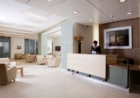
Delmatic has supplied a sophisticated lighting-management system for the new cancer centre of The London Clinic, providing enhanced control for patients and staff, while minimising lighting energy consumption. This is one of the most advanced cancer centres in the world. It has eight floors dedicated exclusively to cancer care, diagnosis and treatment.
The 7500 m2 building contains 47 individual patient rooms, 22 day-care pods, specialist haematology and oncology facilities and three radiotherapy bunkers housing state-of-the-art radiotherapy and radiosurgery equipment and treatment-planning areas.
The lighting-management system comprises products from Delmatic’s Metro family of products. It uses a DALI (digital addressable lighting interface) control module to provide digital dimming and scene setting in patients’ rooms and wards, as well as monitoring and highlighting lamp failure.
Each room has a scene-setting panel that enables medical staff to set appropriate lighting for examinations, treatment etc. Patients can control their own lighting via a bedside plasma touchscreen that also controls the television, window blinds and temperature.
Lighting in core areas is switched via multi-circuit modules based on scheduled commands and presence/absence detection.
A key feature of the specification by M&E consulting engineers Cundall was that the system could merge DALI control across three circuits, as the medical requirements necessitated two lighting circuits and a central-battery circuit per room.
The entire lighting system is managed and monitored through graphical head-end software that displays the active status of the lighting and enables the system to be reconfigured through the software.