


Rooftop revolution: How solar is lighting the way for UK business
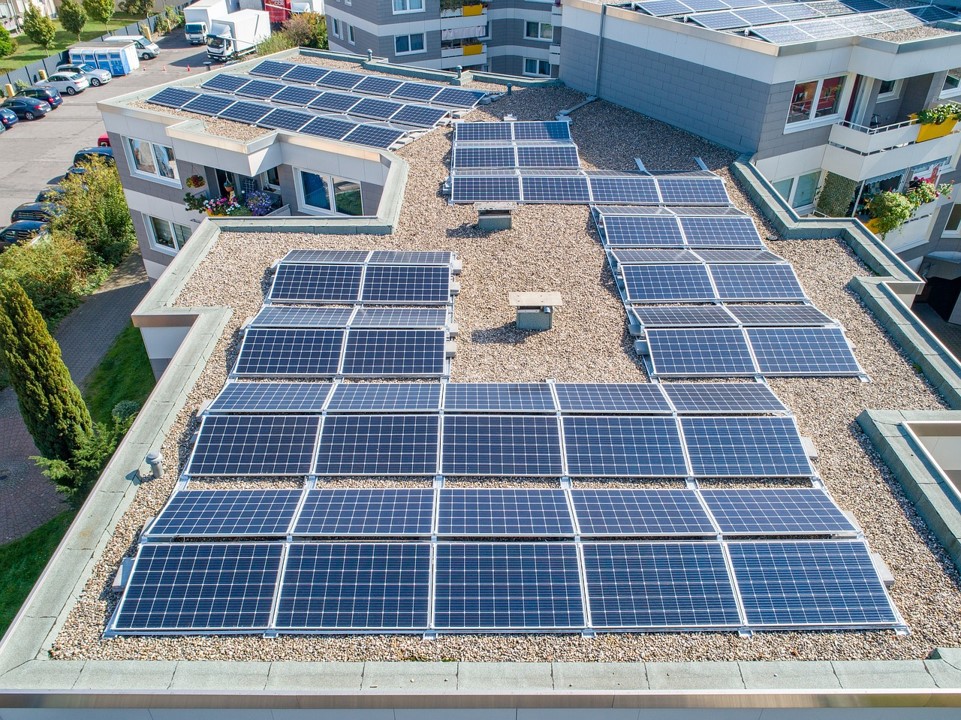
While rooftop solar has long been a savvy choice for businesses seeking to cut costs and champion sustainability, the recently unveiled UK Solar Roadmap by the Department for Energy Security and Net Zero cements solar’s crucial role in achieving the nation’s ambitious climate targets. David Woon, Head of Net Zero Engineering and Operations at Ennovus Solutions, discusses the key benefits of solar and how businesses can make the most of upcoming changes.
For years rooftop solar has proved to be one of the most cost effective and popular renewable energy choices for businesses. Most recently, the UK entered 2025 with an impressive 18GW of solar power deployed, and 2024 saw renewables contribute over half of the nation’s electricity, with solar playing a record-breaking part.
Now, the new Solar Roadmap has revealed the government’s bold target of an 81% reduction in emissions and a staggering 70GW of deployed solar generation by 2035 – with an interim target of 45-47GW by 2030. While this marks a pivotal shift and an ambitious goal, it also presents a prime opportunity for businesses to invest and realise significant financial returns; primarily through a clearer path for businesses to adopt solar, bolstered by increasingly enticing funding solutions and Power Purchase Agreements (PPAs).
Identifying key candidates for solar Contrary to popular belief, almost any building with roof space can work for solar, provided it’s designed and installed correctly. However, it’s important to note that every building is unique, possessing distinct energy requirements, meaning a solar array should always be custom-designed for each business – it’s far from a one-size-fits-all solution.
In our experience at Ennovus Solutions, building types that typically yield the highest energy and carbon savings are high energy users with a large building footprint. This includes sectors such as manufacturing, leisure centres, swimming pools and hotels located outside of city centres.
It’s worth stating that before any installation, regardless of the roof’s age or visual condition, a structural survey will always be required. If a roof space has deteriorated or has significant damage, a roof condition survey (both pre – and post-installation) can be recommended for added peace of mind.
Navigating hurdles
The journey to installing rooftop solar requires careful attention at each step, from initial engagement to final commissioning. While cost is often perceived as the biggest barrier, a well designed solar array often boasts a payback period of less than five years – a highly attractive return for an asset with a 25+ year lifespan.
From a technical viability standpoint, the most significant hurdles often arise during the pre-installation compliance phase. Crucially, all these steps can run concurrently, typically completing within two to three months:
• Grid approval: For solar installations exceeding 16A per phase (11.04kWp for three-phase systems), a G99 application is required to your local Distribution Network Operator (DNO). Approval is needed before installation to ensure that the system can be safely connected to the network. The application demands detailed technical specifications, and incomplete information can cause delays or rejection. Following their network study, DNOs may also impose constraints or require
network upgrades, impacting project cost and timelines. The new Solar Roadmap aims to streamline these grid connection processes, particularly for larger solar projects.

• Structural survey: Before any installation, a qualified structural engineer must confirm the roof can support the additional weight of solar panels. If the roof is deemed structurally unsound, this can be a significant hurdle due to costly upgrades. However, lighter weight solar panel options can often provide a more cost effective solution than extensive structural modifications.
• Planning permission: Generally, rooftop solar installations, if designed within permitted development rights, do not require extensive planning permission. Only systems above 50kWp need prior approval, while those below this threshold typically require no engagement with the local planning authority. The Solar Roadmap’s goal is to further simplify these processes, particularly for commercial properties.
Exploring funding options
Solar is often perceived as a large capital investment, but numerous funding routes make it accessible to most businesses. Power Purchase Agreements (PPAs) are a popular solution, directly highlighted in the Solar Roadmap. These long-term agreements, typically 20 years, allow businesses to pay for the energy generated by the solar system at a significantly reduced and predictable rate compared to grid electricity. The key benefit is no upfront capital investment, enabling immediate operational savings that can be reinvested into other business priorities. This also provides long-term energy price security, protecting businesses from volatile market fluctuations.
Other strong alternatives include Hire Purchase (HP), where businesses gradually own the asset over a shorter term (often seven to 10 years), and Energy as a Service (EaaS), which functions more like a subscription model, providing solar energy without the responsibilities of ownership or maintenance.
Return on investment
For businesses opting for a capital investment rather than a funding route, a well designed roof-mounted solar PV system will typically have a swift payback period of around five years, or sometimes even lower. This calculation factors in operation and maintenance costs, which should include an annual electrical servicing and inspection, as well as annual or biennial module cleaning depending on the location.
Understanding these maintenance requirements and incorporating them into the design can further enhance the ROI, even if it slightly increases the initial capital cost. For example, installing permanent fall protection and roof access alongside the solar array will not only improve health and safety, but also reduce operational expenditure by mitigating the need for temporary protection during the operation and maintenance phase.
The UK Solar Roadmap, coupled with the proven financial and environmental benefits, unequivocally positions rooftop solar as a pivotal force in the nation’s energy future. For businesses, the time to consider harnessing this powerful, sustainable resource has never been better.