


Solar thermal heating teams up with oil in secondary school
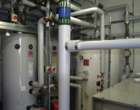
Solar energy is combined with oil to deliver domestic hot water for the new dormitory block at Brymore School of Rural Technology in Somerset. This school educates boys from 13 to 17 and differs from many other secondary schools by offering hands-on experience for learning through its organic working farm and gardens.
One of the main specifications for the new building was the use of LZC (low/zero-carbon) technologies. Contractor Heat Radiation immediately looked to Andrews to fulfil this requirement for the hot-water system.
Seven SOLARflo glazed flat-plate aluminium tray solar collectors were fitted at the same angle as the roof (about 20°) to optimise their energy efficiency.
The two oil-fired storage water heaters are in a plant room adjoining the accommodation block. There are 30 basins, 20 showers and four baths in the building.
Chris Gray of Heat Radiation comments, ‘We have used Andrews water heaters frequently over the years as we have always found them to be reliable and efficient with good technical back-up, which is why we were confident in specifying the SOLARflo solar-thermal package for this project. The installation was simple and straightforward.’
Water is preheated by the solar collectors, and the heat is then transferred to a single-coil unvented cylinder, which in turn supplies the water heaters and reduce oil consumption.