


Upgraded BMS will improve efficiency of research centre
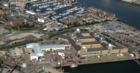
The 30-month upgrading of controls and building-management systems at the National Oceanography Centre in Southampton is nearing completion. The National Environment Research Council which owns the centre, appointed Matrix Sustainable Energy Efficiency, a partner of Siemens Building Technologies Division, to carry out the work. The legacy system has been replaced with Siemens PXC controls and Desigo V4.1 head-end PC software.
The upgrade programme was designed to overcome legacy issues associated with obsolete equipment and to achieve optimum energy efficiency. It was crucial that all upgrade work was carried out with minimal impact on the continued functioning of the centre. To this end, a dedicated onsite team from Matrix worked closely with the centre’s facilities-management team.
Paul Murphy, regional manager for Matrix South East, explains, ‘There are over 50 individual control panels requiring systematic upgrading as part of this project. During the course of the upgrade works, temporary wiring modifications to individual control panels had to be incorporated to ensure essential equipment remained operational during the controls upgrade process, thus ensuring minimal disruption to services and personnel.’
The original AS1000 controls and associated backplates were removed and replaced with new control backplates including Siemens PX controls which were fully function tested before installation. Wherever possible , the original control strategy was enhanced to give further energy savings. Direct Modbus integration with the generator and UPS panels have been incorporated to ensure total visibility of essential services.
The new head-end software gives additional functionality and easy-to-use full graphics. Up to five users can monitor the system at the same time.
Other improvements include increased visibility of plant and alarms. Alarms have been further categorised and their functionality enhanced.
The site’s energy efficiency has been boosted by identifying valves that are not working or passing water.