


Schneider Electric training academy wins controls industry award
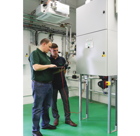
Schneider Electric’s Built Environment Training Academy at Ashby-de-la-Zouch has been acknowledged in the 2016 awards of the Building Controls Industry Association for its contribution to training. The academy houses a live complex low-voltage distribution system, low-temperature-hot-water distribution system and ventilation system with VAV and fan-coil-unit applications. It delivers courses for the company’s own engineers and the wider controls industry — including customers and end users.
The academy offers 44 individual courses and is an approved Pearson EdExcel training academy.
It also offers 39 product training courses focusing on Schneider Electric’s SmartStruxure range.
Jason Yarnall from the estate office at the University of Nottingham, who has attended a course at the facility, said, ‘I was very impressed with the setup of the facility in Ashby-de-la-Zouch.
‘In an industry where plant technologies are developing quickly and BMS controls are only becoming more complex, training facilities of this nature are vital to ensure industry engineers can keep pace with, and obtain the necessary skillset required to work safely and efficiently. Schneider Electric’s Built Environment Training Academy exemplifies the commitment that the company has to not only the development of its own staff, but to the industry as a whole’