


Bulkhead chilled beams can heat and cool hotel rooms
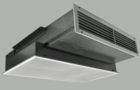
Solid Air’s bulkhead chilled beam is said to be a quieter, energy-efficient alternative to fan-coil units for hotel bedrooms and similar applications. OKNB units achieve these higher efficiencies by requiring high cooling water temperatures and lower heating water temperatures than equivalent fan-coil arrangements. There is also no need for a fan. They are Eurovent certified, so their capacity is guaranteed.
For cooling , the OKNB typically operates at 15/18°C, compared with 6/12°C for an FCU. For heating, the OKNB requires 50/40°C, compared with a typical 80/70°C for an FCU. These temperatures make the OKNB well suited to central water systems such as heat pumps and geothermal designs.
The OKNB feeds primary ventilation air through high-velocity nozzles into the chilled-beam housing. The air nozzles produces a strong induction effect which induces room air via the return-air faceplate to pass over the cooling/heating coil. This room air then mixes with the primary air before being supplied to the room through a wall diffuser. Three nozzle options enable the designer to select the appropriate unit to match the required cooling/heating capacity and required primary airflow rate.
OKNB units are bulkhead mounted and suitable for cooling, heating and ventilating applications in areas with ceiling heights up to 3 m.